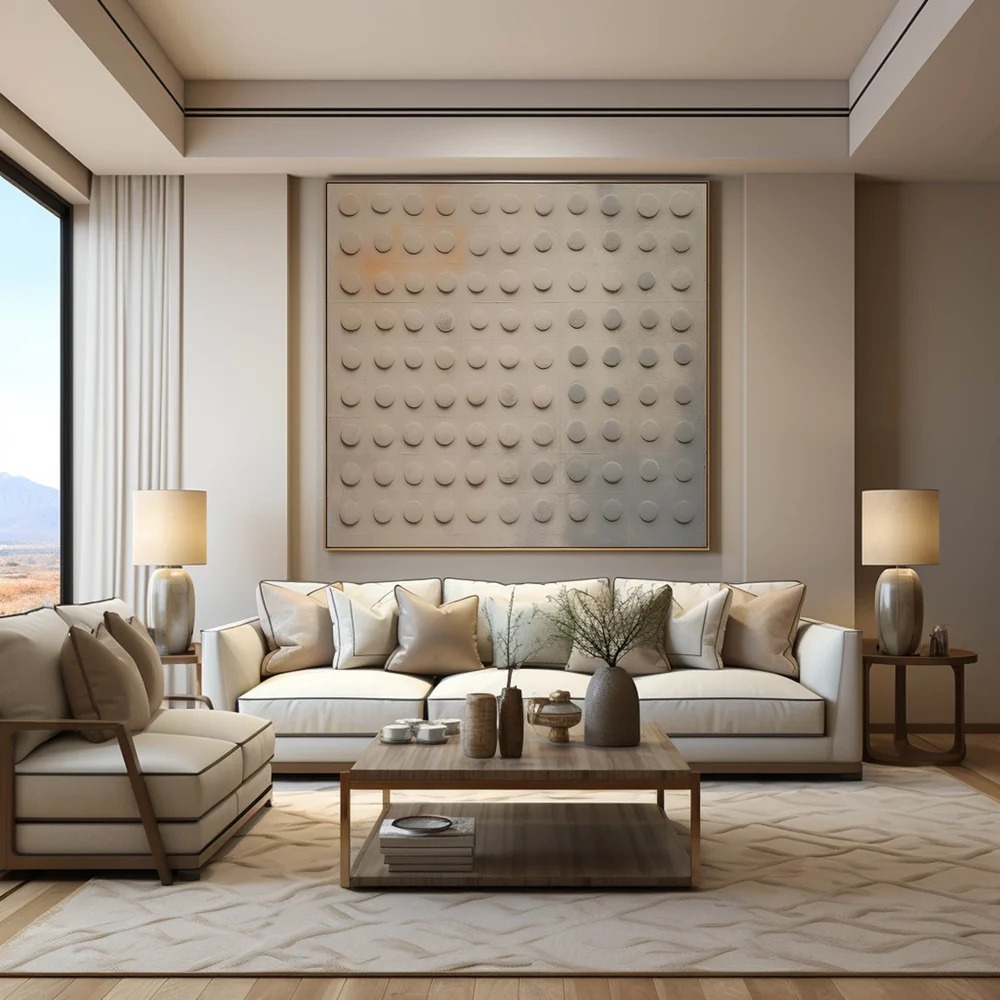
A sofa can fit the wall and still block a doorway, crowd a coffee table, or leave shorter users unsupported. By checking the room, delivery route, seating format, comfort details, and upholstery performance in the right order, you can choose a set that works beyond the showroom.
Key takeaways
- Measure sofa width, depth, height, and every delivery route before ordering.
- Keep clear walking space around the sofa and avoid blocking doors or passages.
- Test seat depth, seat height, cushion firmness, and arm height for real comfort.
- Choose upholstery based on spills, pets, sunlight, cleaning time, and daily wear.
Measure the Room and Reserve Clear Walking Space
A room size does not tell you whether a sofa will fit comfortably. Measure the wall width available for the sofa, then measure sofa depth from the back wall toward the centre of the room. Include the ceiling height when choosing a tall-back design, especially beneath low ceilings or architectural features.
Record these dimensions before comparing sofa specifications:
- Wall width: subtract skirting boards, pillars, switches, radiators, and the space needed beside each arm.
- Available depth: measure to the nearest obstruction, including a coffee table, bay windows, shelves, or another seating piece.
- Ceiling height: check whether a high back, canopy, or sectional corner will make the room feel cramped.
- Openings: mark door swings so the sofa does not block the door leaf, handle, or access to a window.
- Fixed obstacles: measure the projection of radiators and note whether heat circulation or maintenance access would be blocked.
- Walking clearance: reserve about 30–36 inches for a usable route; keep the full 36 inches where an accessible passageway applies.
Allow about 16–18 inches between the front of the seat and a coffee table. Reduce that distance only when nobody needs to pass through the gap, and increase it when users need more legroom or the table has drawers.
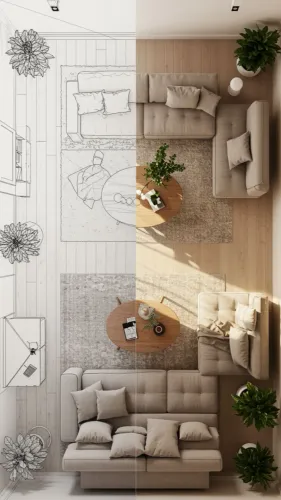
Tape the sofa footprint on the floor, then walk through every route; a sofa that fits its rectangle can still make the room difficult to use.
Match the Sofa Configuration to the Room and Household
Choose the configuration by matching room dimensions with household size and daily habits. For one or two people, a loveseat or two-seater sofa preserves circulation in a compact room; a three-seater sofa suits a larger wall or a household that regularly sits together.
OptionBest fitMain compromiseLoveseatSmall rooms, bedrooms, or two-person seatingLimited space for visitorsTwo-seater sofaApartments and flexible living roomsLess seating for a larger householdThree-seater sofaA straight wall and regular family useOccupies more uninterrupted wall spaceSectional sofaLarger rooms needing several seats in one footprintHarder to relocate and can restrict circulationL-shaped sofaCorner seating with a defined lounging zoneIts fixed return can interfere with doors or pathwaysChaise loungeOne person who stretches out without a full sectionalUses floor area without adding a full seatModular sofaHomes where seating needs or layouts changeConnectors and separate modules need careful arrangement
A sectional sofa and L-shaped sofa can use a corner efficiently, but confirm which side holds the chaise lounge, where the arms and connectors sit, and whether modules separate. Choose a modular sofa when you expect to move, expand, or reconfigure the seating.
For upright conversation, dining-height work, or users with limited mobility, avoid assuming that a deep, low arrangement is comfortable. A firmer seat, higher sitting height, and defined arms usually make standing easier; test the actual sofa before ordering. Ensure the chosen layout leaves about 30–36 inches for a usable walking route.
Test the Footprint and Delivery Route Before Ordering
A sofa can fit its planned position and still fail at the entrance. Confirm both the sofa footprint and the complete delivery route before you pay a deposit.
1. Record the sofa’s maximum outside dimensions, including arms, rear cushions, feet, recliner mechanisms, and projecting parts. Do not rely on the advertised length alone. Note the closed depth, height, diagonal measurement, and every manufacturer-supplied packaged dimensions.
2. Mark the sofa footprint on the floor with painter’s tape. Include the actual arm-to-arm width and full depth, then place your coffee table and check that the remaining walking route stays usable. For a motion sofa, test the open position and the specified reclining clearance behind and in front.
3. Measure the narrowest point from the street or building entrance to the room. Check door openings with the door fully open, then measure corridors, turns, stairwells, and lift access. Compare each clearance with the sofa’s height, width, depth, diagonal measurement, and packaged dimensions.
4. Ask the seller or delivery team how the sofa will be rotated, carried, and unpacked. Confirm whether legs, doors, cushions, or modules come off, and whether a sectional separates at its connectors. A route that works only after removing a door or using a balcony lift needs written approval before ordering.
If any measurement is close, choose a smaller model or a modular design rather than hoping the crew can force it through.
Use Seat Dimensions to Test Real Comfort
Seat height and usable seat depth matter more than the sofa’s overall depth. A practical starting range for many adults is a 17–19 inch seat height and 20–24 inch usable seat depth; thick back cushions can reduce that space by several inches.
User or activityMeasurement to prioritiseWhat to testOlder adultsHigher seat height and 20–22 inch usable seat depthCushion firmness, defined arm height, lumbar support, and ease of standingChildrenLower seat height or a footrestWhether their feet flat on floor position is stable and the depth does not force them to slumpTall people22–24 inch usable seat depthWhether knees remain supported without the back cushion pushing their shoulders forwardLoungingDeeper seat and a reclined back angleWhether you can stretch out without losing lumbar supportUpright conversation or laptop useShallower depth and more upright back angleWhether your feet stay planted and your arms rest comfortably
Sit for at least ten minutes, not just a quick showroom perch. Check that the cushion firmness supports you without pressure points, and ask for foam density rather than treating firmness as proof of durability; foam softens with use.
Feather fill feels soft but needs regular fluffing. Fibre fill also offers a relaxed feel and loses loft faster than a well-supported foam core. Check arm height for shoulder comfort, then stand without pushing hard against the cushions. A low, deep chaise can suit lounging but restrict upright work and mobility.
Choose Upholstery That Matches Daily Wear and Maintenance
A sofa for children and pets needs more than advertised stain resistance. Choose a tightly woven, cleanable fabric over a loose loop or deep texture, then check abrasion resistance, pilling, snag resistance, lightfastness, and colour practicality separately. A high test score does not protect against claws, rivets, sunlight, or concentrated wear.
CheckCompareWhy it mattersUpholsteryTight weave versus looped or delicate surfaceTighter construction improves cleanability and snag resistanceCoversRemovable covers and reversible cushionsEasier washing and even wear, but neither guarantees stain resistanceCushion coreHigh-resilience foam, foam-and-fibre wrap, or loose fibreAsk how quickly it loses loft and whether replacement cushions are availableTest evidenceWyzenbeek or Martindale result, plus BIFMA X5.4 where suppliedTest methods are not interchangeable and do not guarantee comfort or lifespan
Ask for the cleaning code before ordering. Follow the stated method; a water-cleanable fabric can still mark permanently after an aggressive solvent or delayed spill. Plan cushion maintenance around the design: rotate and fluff cushions where permitted, and confirm warranty exclusions for compression, pilling, pet damage, and incorrect cleaning.
For professional layout support, ask DRISYA INTERIORS AND ARTS - By Rashmi Khurana to review the upholstery choice alongside placement, including the practical 16–18-inch gap between the seat front and coffee table. That distance must still preserve legroom and a clear route around the sofa.
Related service
All Furniture Works
All Furniture Works
All Furniture Work with Drisya Interiors & Arts At Drisya Interiors & Arts, we design and create custom furniture solutions that perfectly match your...
Frequently asked questions
- How do I measure a room before choosing a sofa?
- Measure the wall width available for the sofa and the sofa depth from the wall toward the room centre. Record ceiling height for tall-back designs and preserve clear walking space around doors and passages.
- Which sofa configuration suits my room and household?
- Match the configuration to the room footprint and how people use it. Choose a compact sofa for limited space, a sectional when you need defined lounging zones, and additional seating only when it does not obstruct movement.
- What should I check before ordering a large sofa?
- Measure the entrance, lift, stairwell, corridor, doorway, and tight turns along the delivery route. Compare those measurements with the sofa package dimensions, including removable legs and the narrowest packed section.
- How can I test whether a sofa will be comfortable?
- Check seat height, seat depth, cushion firmness, back support, and arm height by sitting in the sofa in your usual position. Your feet should rest securely on the floor without pressure behind your knees.
- How do I choose sofa upholstery for everyday use?
- Choose fabric or leather according to spills, pets, children, sunlight, cleaning time, and use frequency. Ask about cleaning instructions, removable covers, colourfastness, abrasion performance, and stain-treatment limits before ordering.
Keywords